

J.K. Rowling and the boy who arrived on a delayed train
One journey without a pen, seven years of writing and twelve rejections. Then the best-selling book series in history.
The delayed train
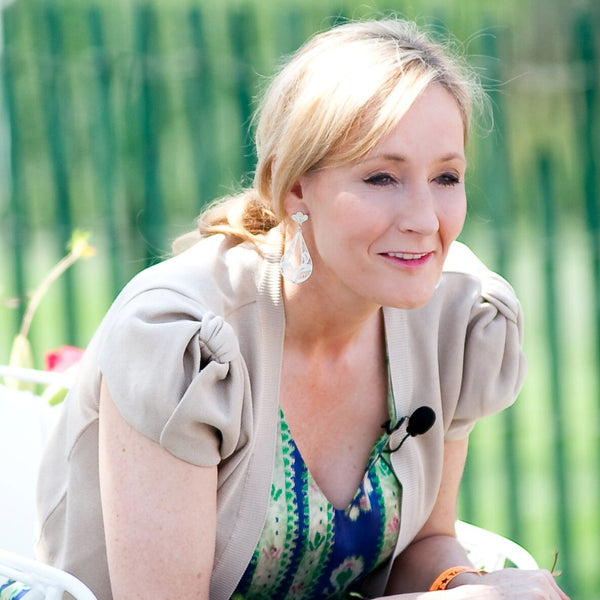
In 1990, Joanne Rowling was travelling back from Manchester to London. The train was stuck for several hours, and she had nothing to write with. That was when a skinny, bespectacled boy who doesn’t know he is a wizard walked into her head. By the time she pulled into King’s Cross, she had already sketched out a school of magic and several of its inhabitants. She only wrote it all down that evening at home.
A few months later, in December 1990, her mother died. Rowling later said that this loss found its way into the book — Harry is, after all, a boy who longs for his parents throughout the entire series.
Edinburgh cafés
Then came Portugal, where she taught English, a brief marriage and the birth of her daughter. In 1993 she returned to Britain and settled in Edinburgh — a single mother living on benefits. She wrote in cafés, her baby asleep in the pram beside her. All told, she spent around five years writing the first book.
The most famous school of magic in the world was born at a café table, in the gaps between a baby’s naps.
Two letters instead of a name
The manuscript was turned down by twelve publishers. It was finally accepted by Bloomsbury, then a small house — reportedly because the chairman’s eight-year-old daughter read the first chapter and demanded more. On 26 June 1997, Harry Potter and the Philosopher’s Stone came out in a first print run of just 500 hardback copies.
The publisher feared boys wouldn’t pick up a book written by a woman, so they asked for initials. Joanne had no middle name — she added K for Kathleen, after her grandmother. And so J.K. Rowling was born. The cover of the first British edition was drawn by a young illustrator, Thomas Taylor — it was his very first commission.
Seven books, eight films
The series ran to seven books, from 1997 to 2007. Today it stands at more than 500 million copies sold in over 80 languages, and words like muggle and quidditch have entered everyday speech. Warner Bros. brought the story to the screen in eight films (2001–2011), which grossed more than 7.7 billion dollars worldwide. Add to that theme parks, a stage play, games and an endless stream of merchandise — because Hogwarts today is also an aesthetic that people collect.
In Polish
In Poland, Harry arrived in 2000, published by the Poznań-based house Media Rodzina and translated by Andrzej Polkowski. It is to him that Polish readers owe the names and terms an entire generation grew up with.
Today
Rowling remains a co-creator of new projects set in the world of Harry Potter, including the HBO series, whose first season — Harry Potter and the Philosopher’s Stone — premieres on 25 December 2026. Since 2020, her public statements on gender identity have sparked controversy, and some fans now separate the series from its author. Yet the books and their characters live a life of their own — on shelves, in cinemas and in the collections of each new generation.
Chapters of the world
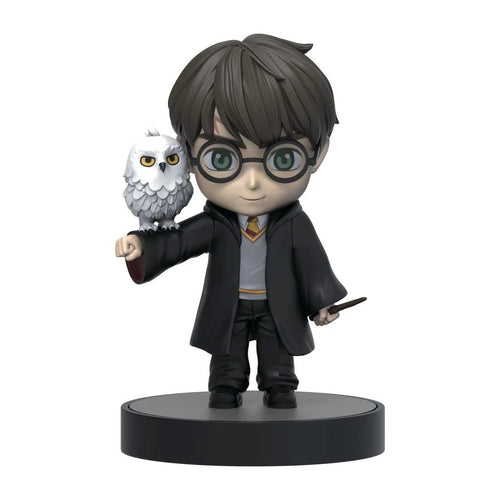
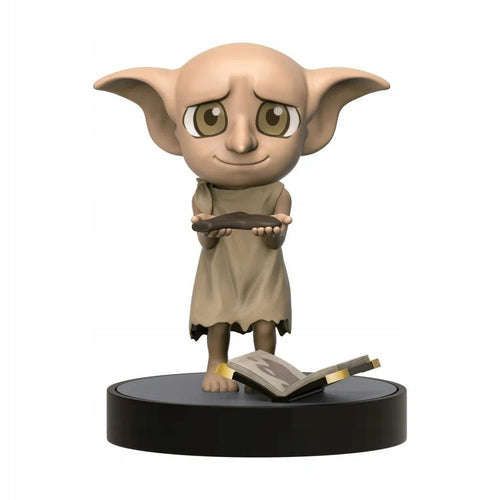
Hedwig and other Hogwarts collectibles are waiting for you here — for everyone still waiting for their letter.
See the products →Read also: Winnie-the-Pooh · Miffy: Dick Bruna · Follow: Harry Potter