A Gift for an Artist — Why It's a Minefield
Buying a gift for a creative person is a high-risk assignment. This is someone with a sharpened eye who spots a bought-because-it's-pretty object instantly, and who will accept a Klimt poster with a polite smile you'll remember for years. On top of that comes the paralysis: if they make beautiful things themselves, what could I possibly give them?
The good news: precisely because they have a sharpened eye, they're easier to delight than you think. You just have to know which way to look — and which way not to.
To someone who creates, don't give more tools for creating. Give them something someone else made — an object they can simply look at, instead of work with.
First, what to avoid: don't buy tools
The first instinct is always supplies: a sketchbook, a set of paints, "professional" markers. The trouble is, it's a bit like buying salt for a chef. Someone who works creatively has very specific preferences about their tools — they chose them over years and will buy them for themselves, exactly as they need them. The sketchbook from you will most likely join three others, untouched, on the same shelf.
There's a second, subtler problem: a tool is an invitation to work. A gift that says "create more" can be the last thing someone needs if they create every day — including for a living, including when they've got nothing left in the tank. Far more tender is a gift that says: "you can just look."
Collectible figurines — small sculptures at an accessible price
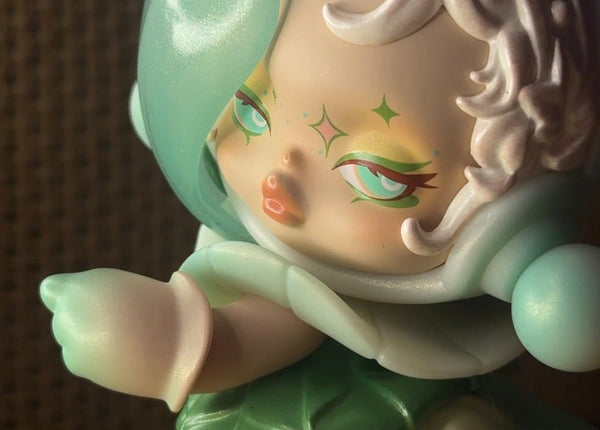
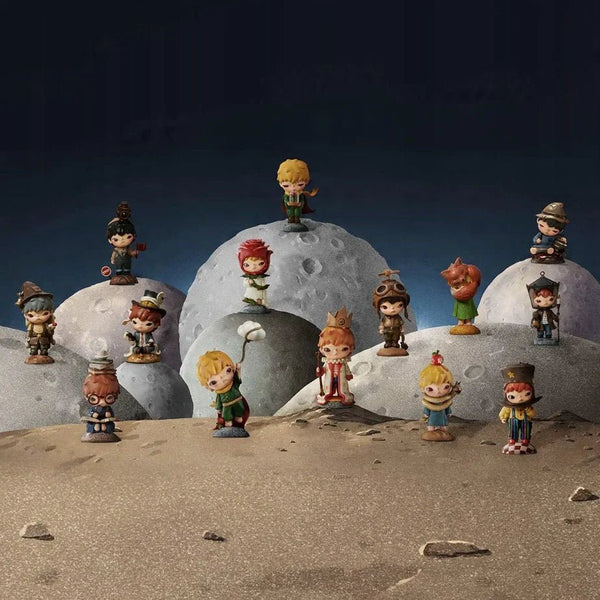
Art toys — figurines designed by artists and released in limited series — work exactly like art prints: there's an author, there's an edition, there's collecting. In Asia they've long stood on gallery shelves beside contemporary art; in Europe they're only now earning that status. For a creative person, it's a gift that works on several levels at once:
- It's art, not a gadget. Behind every good figurine stands a specific artist with a recognisable visual language — like Lang, the creator of the melancholy Hirono, or Molly Yllom, the author of the crying Crybaby. You're handing over someone's work, not a product.
- It understands the convention. Someone with an art-school background or a designer's eye reads editions, series, and formal decisions — they'll appreciate a figurine the way they appreciate a good print: knowingly.
- It has a nerve the poster lacks. Safe reproductions bore people who live through images. A figurine with character — strange, tender, a touch unsettling — is a declaration of taste, not a compromise.
6 ideas — choose by aesthetic, not by occasion
1. Hirono — for the melancholy soul
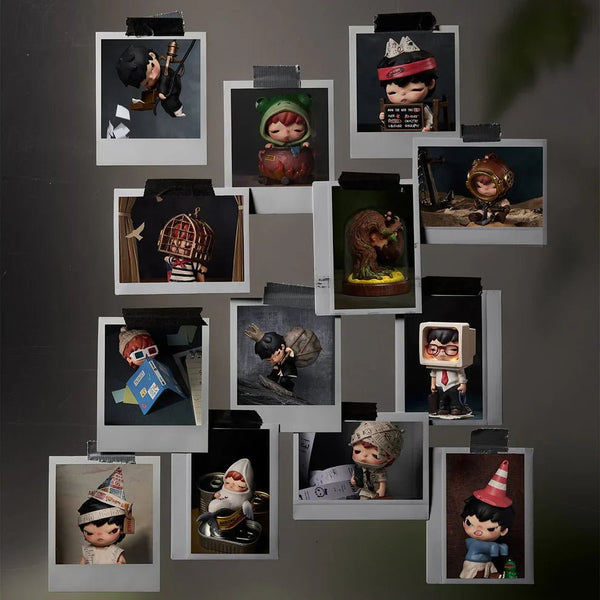
A boy with sad eyes, suspended between childhood and something harder to name. Hirono is the most "sculptural" proposition in the art-toy world — the figurines look like miniature gallery objects rather than toys. A gift for someone whose work or sensibility has a darker, more reflective tone.
2. Skullpanda — for an aesthetic of darkness and the avant-garde
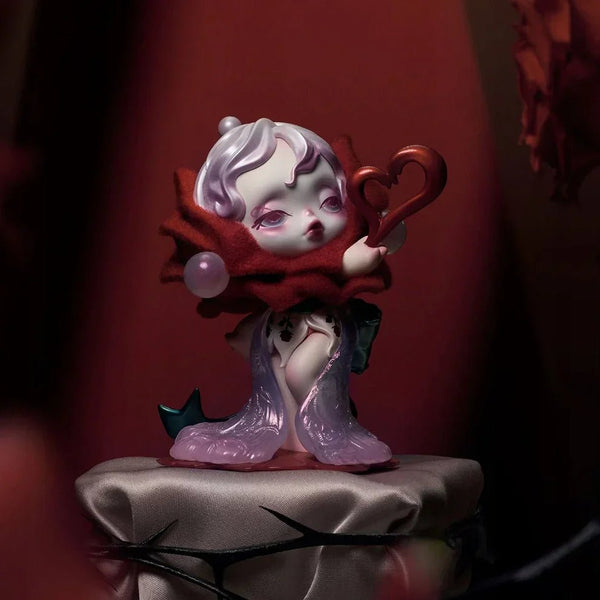
A character balancing between gothic, fashion, and science fiction — each series a different costume and a different concept, a little like a fashion house's collections. For someone who wears black, listens to music you've never heard of, and whose studio looks like a film set.
3. Crybaby — for those who create from emotion
A figurine that cries — and doesn't apologise for it. Crybaby, by the Thai artist Molly Yllom, became a manifesto of tenderness toward one's own emotions. For someone whose art (or life) revolves around feelings: an illustrator, a poet, anyone unafraid of sentiment.
4. Miffy — for minimalists and graphic designers
Dick Bruna's little rabbit is one of the most perfect forms in the history of graphic design: a few lines, two dots, nothing superfluous. A designer will understand the choice at once — it's a gift quoting the canon of design, not a plush trifle.
5. Blind box — for those who love the process
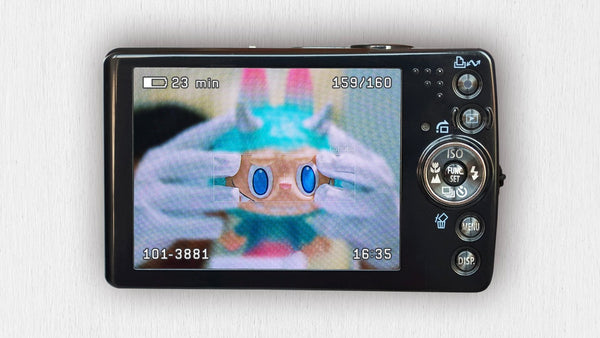
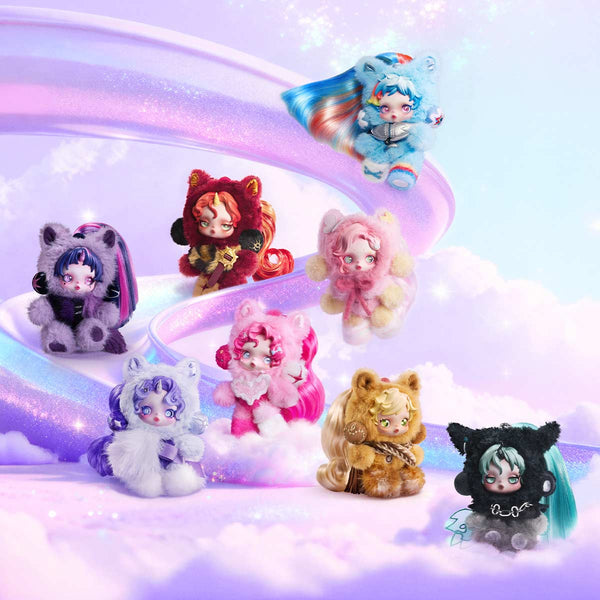
Creative people understand the value of surprise better than anyone — chance is, after all, an old and trusted tool of art. A blind box turns a gift into a small event: the tension, the unwrapping, the reveal. And if they already collect, quietly find out which series they're currently completing.
Pop Mart blind boxes → All figurines →
6. Smiski — for the studio and the desk
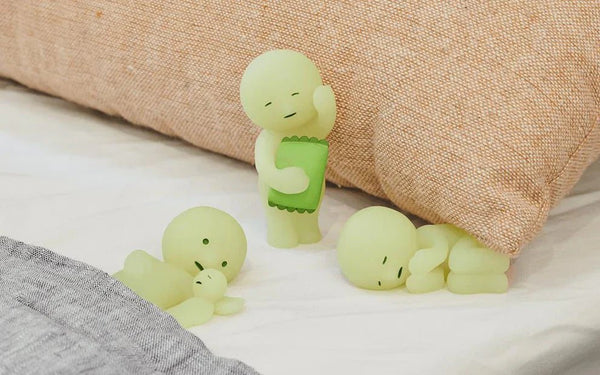
Tiny glow-in-the-dark little figures that move into corners — they perch on shelves, climb the cables, glow after dark. In a studio or on a desk full of projects, a Smiski becomes a quiet companion for late-night work. Minimal format, maximum character.
How to choose in 4 steps
Recall their aesthetic, not their interests
Don't ask "what do they like to do," ask "what do the things they surround themselves with look like." The palette they wear; the images they share; the mood of their home. Darkness or pastel? Minimalism or excess? That's a better compass than any gift list.
Check who's behind the figurine
The biggest difference between a gadget and an art toy is the author. Choose a figurine you can say two sentences about: who designed it and what it's about. That knowledge is part of the gift — and for someone with an artistic background it's often more important than the object itself.
Choose the original, always
Someone who creates will sense a fake in three seconds — and nothing will hurt them more than fake "art." Buy from sellers who are clear about where their stock comes from, and where a figurine's authenticity can be verified.
Leave the packaging alone
Art-toy boxes are designed with the same care as the figurines — illustration, typography, construction. For someone visually attuned, the packaging is part of the work. A ribbon is enough; the artwork inside the folder will do the rest.
Ideas by budget
- Up to 100 zł — a single blind box from a series chosen to suit the aesthetic, a Smiski for the studio, a small-format miffy.
- 100–250 zł — a Hirono, Skullpanda or Crybaby figurine from a specific series; a set of two or three blind boxes as an opening ritual.
- Over 250 zł — a larger collectible figurine, the start of one artist's collection, or an object that will take up permanent residence in the studio.
Frequently asked questions
Wouldn't an artist rather receive art supplies?
Usually not — the tools of creative work are a very personal choice, and those who create professionally buy them themselves, exactly as they need them. A gift-as-tool easily lands beside their preferences; a gift-as-object, chosen for the aesthetic, lands in their taste.
Isn't a figurine too "pop" for someone with an art-school background?
The line between "high" art and pop culture came apart long ago — art toys are exhibited in galleries and designed by artists with classical training. Someone from the art world usually knows the convention perfectly and reads a figurine like a small limited-edition sculpture.
How am I supposed to know which artist is behind a figurine?
A good shop states it outright — next to the figurine you'll find the designer's name and the context of the series. At Kickomi we describe the creators alongside the collections and in the artist profiles on the blog, so the two sentences to hand over with the gift are right there.
And what if this person already collects figurines?
That's the best-case scenario: ask discreetly (or sneak a look at the shelf) which series they're completing, and add the missing piece or a fresh blind box from the same universe. What delights a collector most is a gift that understands their collection.
Looking for ideas for someone outside the art world? See also our guide: a gift for the person who has everything.
Small art, grand gesture
See the figurines →