Elena Kucharik and the bears that taught children to name their feelings
They were meant to be a drawing for a greeting card. They became the first emotional dictionary for an entire generation.
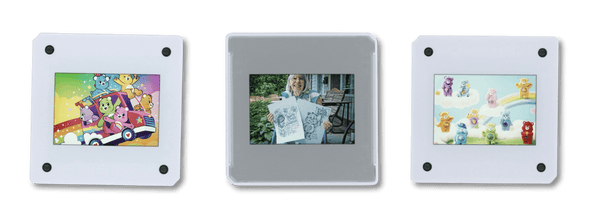
It started with a commission of the kind American Greetings handed out by the hundreds. In 1981, illustrator Elena Kucharik was given a task: draw bears for greeting cards. The constraint was simple — each bear a different colour, each with a single symbol on its belly. And that very constraint turned out to be an idea that would outlive four decades. A rainbow is joy. A clover is luck. A heart is love. A child who can’t yet say “I feel sad” points a finger at a bear — and suddenly has a word for it.
The official debut came in 1982, and a year later the bears reached the shelves as plush toys. The rest is numbers no one saw coming.
The woman who drew them
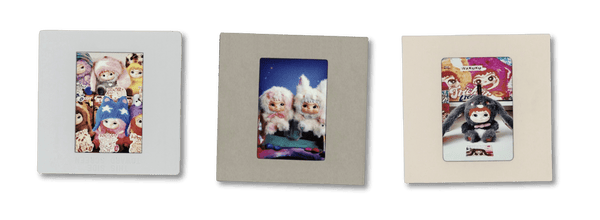
Kucharik was born in Cleveland, Ohio, studied fine arts at Kent State University and joined American Greetings as a card artist — one of those jobs no one imagines could reshape popular culture. When the company commissioned the first bears, it was she who gave them a face. Over a quarter of a century she drew hundreds of illustrations: for cards, books, clothing, an entire avalanche of licensed products. She wasn’t the executor of a single project — she was the brand’s lead artist and co-author. After twenty-five years of freelancing she set Care Bears aside and turned to what had started it all: illustrating children’s books.
An emotion on the belly
At the heart of the design — literally in the middle of every bear — is the Belly Badge, the symbol on the tummy. The idea came from the TCFC team, but it was what decided what Care Bears really are. Because the bears weren’t meant to be merely sweet. They were meant to give children a language before they had words.
That’s why, beside Cheer Bear with her rainbow, stands Grumpy Bear with his cloud and rain. It’s not a mistake and not an accident. It was a deliberate message: a bad mood is fine too, it has its own bear, it belongs in the world. In 1981 that was subversive thinking about a toy — not “be good and cheerful,” but “all your feelings have a place.”
They were meant to lie on a greeting card. They ended up teaching children, for forty years, to speak about love, anger and sadness. No therapy was ever this colourful.
Care-a-Lot, where they come from
The bears live in Care-a-Lot — a kingdom of clouds, hearts and stars whose name is a play on Camelot. They come down to Earth whenever a child is having a bad day, and their tool is the Care Bear Stare: a beam of light fired straight from the Belly Badge. The cartoon launched in 1985, and between 1985 and 1987 three theatrical films were made. That’s when a line of cards became a whole world.
Why they keep coming back
Care Bears didn’t so much survive as return in waves. In 2002 American Greetings refreshed the brand for its twentieth anniversary. In 2007 came CGI animation. In 2019 — “Unlock the Magic” on Boomerang and HBO Max. Today the rights belong to WildBrain, and the plush toys and figures now reach not children but millennials who have known Grumpy Bear forever — and are buying him now for themselves, not for a child. It’s a rare case of a brand that aged alongside its audience and gained from it.
Who’s worth meeting
If you’re only just stepping into this world, these four are the easiest to remember — and the ones that turn up most often in collections.
The first four
The whole Care Bears collection is waiting here — Belly Badge and all the rest.
See the collection →