Rose O'Neill and the cherub that conquered the world for a hundred years
Kewpie began as a drawing in a newspaper. It ended up as the first merchandising empire built by a woman.
In December 1909 the illustrator Rose O'Neill published in “Ladies’ Home Journal” a comic about plump, winged elves with a distinctive topknot on their heads. She named them Kewpie — after Cupid, the Roman god of love. They were meant to “do good deeds in a funny way” and won the hearts of readers of every age almost instantly. Three years later, in 1912, production of porcelain dolls began in a German factory — and Kewpie became one of the first mass-marketed toys in the world.
Orders were being filled in six countries at once. Until the arrival of Mickey Mouse, Kewpie was the most popular character in America.
The woman who drew them
Rose O'Neill was born in 1874 in Wilkes-Barre, Pennsylvania, and raised in the countryside of Nebraska. No one taught her to draw — she was self-taught. At eighteen she set off for New York and in a short time became one of the highest-paid illustrators in the country, the only woman on the staff of the satirical magazine “Puck”. After the success of Kewpie she became the highest-earning illustrator in the world — and the fortune she built on licensing her own character was estimated at 1.4 million dollars of the time. This was not an artist someone hired for a single commission. This was the owner of an empire she had invented herself.
A dream that became an icon
O'Neill claimed the Kewpie appeared to her literally in a dream — that they “did acrobatic pranks on the bedspread, and one sat down on her hand.” She described them as little round fairies whose only idea is to teach people to be cheerful and kind at the same time. That philosophy — kindness served with humour — became the core of the brand long before anyone spoke of “brand values.”
Little round fairies whose only idea is to teach people to be cheerful and kind at the same time. A hundred years later it still works — this time in vinyl, hidden in a blind box.
A cherub at the barricade
Kewpie were more than a cute character. O'Neill used them to fight for women’s rights — she marched as a suffragette and designed posters with Kewpie in the leading roles. In 1914, during a rally in Nashville, Kewpie dolls with “votes for women” sashes were dropped from an aeroplane over the crowd. The same cherubs championed the poor and racial equality, while at the same time O'Neill created entirely different, darker works from her “Sweet Monster” series and exhibited them in Paris. Sweetness and commitment in one character — a rare combination, then and now.
A comeback in a blind box
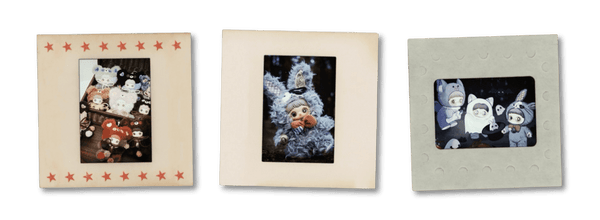
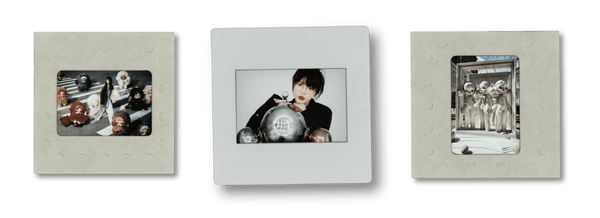
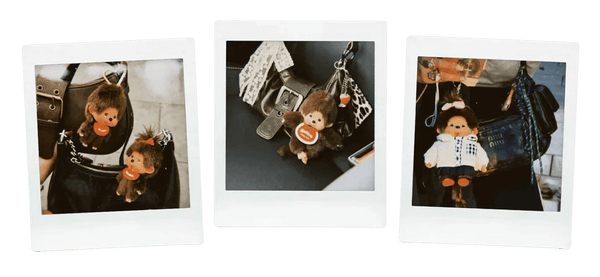
After decades as a collector’s classic, Kewpie has returned in a new form. The brand Smoko, under the official licence of Kewpie Corporation, has released vinyl figures in blind-box format — classic poses, themed series and phone charms. The vintage cherub with pink cheeks has landed right in the middle of contemporary kawaii aesthetics, alongside Sonny Angel and Smiski. The same smile from 1912, only now you don’t know which one will come out of the box — and that’s exactly the point.
The ones worth knowing
If you’re just starting out, these few series are the easiest to recognise and the ones that come back most often in collections.
Iconic releases
The whole Kewpie collection is waiting here — a vintage cherub in a vinyl edition.
See the collection →More: Smoko on Instagram · All creators